Nyiragongo Volcano Trek – climbing to the largest lava lake in the world

Nyiragongo Volcano Trek – climbing to the largest lava lake in the world

off the beaten path africa

Nyiragongo Volcano Trek – climbing to the largest lava lake in the world

Nyiragongo Trek Quick Facts


Location: Virunga National Park

Days Needed: 1

Estimated Cost:  $400 USD 

Value: 200% Worth it! One of my top travel experiences I’ve ever had. 


Why you should visit the Congo?

What if I told you the coolest experiences I have had while traveling were in the Democratic Republic of the Congo? Has the DRC ever been on your bucket list? Well, it should be! I’ve already written about the gorilla trek, and now it’s time to reveal the other major attraction in the DRC, the Mount Nyiragongo volcano trek.

P.S – it makes sense to book the gorilla trek and volcano hike together. Also, there are other activities like kayaking Lake Kivu, so add an extra day to your Congo itinerary to explore Goma.

Is it safe to visit the Congo?

I woke up with a natural high the morning after my Congo gorilla trekking experience. I was eager to head back to Virunga National Park to participate in the Nyiragongo volcano trek.

My excitement turned to fear when I checked my phone and received a message stating, “5 rangers in Virunga National Park have been shot and killed.” I immediately looked at my travel buddy, Jordan, and questioned if coming to the Democratic Republic of Congo was a foolish mistake. Should we still participate in the volcano hike in the same park where poachers killed rangers the previous day?

After consulting our local friend, John Paul – (featured in Local Lingo), and visiting the Virunga Park office, we felt assured that it was still safe to climb the volcano. Unfortunately, ranger deaths are common in Virunga. These rangers risk their lives to protect the park and conservation efforts. If there were any potential threat to tourists, Virunga National Park would close its doors.

Think about it…Virunga National park is the biggest driver of tourism in the DRC. If anything happened to a tourist it would ruin business; therefore the safety of tourists is the highest priority.

With this information, we still decided to climb Nyiragongo on that day, and it was 100% worth it.

Full Disclosure: Virunga National Park had its first incident regarding two British tourists, who were kidnapped for two days in May 2018. The tourists were not harmed physically. The park closed for 10 months to reinvest in safety measures, but just reopened in Feb 2019! Don’t let this one unfortunate incident deter you from booking a trip with Virunga National Park.

5 Reasons Why You Should Climb the Nyiragongo Volcano

    1.  It’s the largest lava lake in the Lava lakes are extremely rare, as there are only 6 lava lakes in the world. The others are located in Erta Ale – Ethiopia, Kilauea – Hawaii, Mount Erebus – Antarctica, Mount Yasur – Vanuatu, and Ambrym – Vanuatu.

2. You can also go gorilla trekking! The cheapest gorilla trekking permit is in the DRC, so might as well achieve two once in a lifetime experiences in one trip.

3. Support Virunga National Park and tourism in the Congo. All revenue that Virunga receives from the permits supports the park’s rangers and the local communities that live within a day’s walk of the park. The money makes a significant impact, considering fewer tourists frequent this country due to safety concerns.

4. The hike was not as hard as all the blogs stated! Yes – it is strenuous, but this is a manageable hike for the average healthy person. There is no rush to get to the top, and everyone can go at his or her own pace.

5. It gives you a chance to explore the Congo. The DRC is not a backpacker friendly country due to its violence and political instability. It is not recommended to travel throughout the country. Goma and Virunga National park are safe for tourists, so the Congo volcano hike is a great way to be introduced to a new country.

    The Nyiragongo Volcano Trek Experience

    If you like to hear stories and know my first hand experience on the trek than you are in the right place! Otherwise, if you are only interested in logistics than skip to the next section.

    So who else is crazy enough to hike a volcano in the Congo?

    Once my friend Jordan and I agreed to still go on the hike, our driver picked us up at 8 am from our hotel and dropped us off at the Kibati entrance. Twelve other brave trekkers from all over the world met us. Here was the breakdown:

    –   5 tall men from Russia who were intimidating, with their professional hiking equipment and RBF’s (resting bitch faces)– can guys have resting bitch face?

    –    An older Sri Lankan couple that we met the previous day on the gorilla trek. They were looking for an adventurous holiday and chose the Democratic Republic of Congo #oldercouplegoals

    –   A younger American couple that was also University of Pennsylvania Alums! (#Quakerpride and yes – our university mascot is a Quaker). This couple quit their jobs in LA and added the DRC and Ethiopia to their one year around the world travel itinerary. Their Instagram is @ourradicalsabbatical and has serious travel inspiration with photos from places that are off the beaten path.

    –   A Belgian man in his 50s, who was no stranger to the DRC, since he does business between the DRC and Belgium. He bought his 18-year-old son to the DRC to celebrate his birthday. A Congolese man who was a business partner accompanied them.

    Let’s start climbing!

    With our eclectic group, we were ready to ascend the mountain. I was nervous to begin the Nyiragongo volcano trek, but I was pleasantly surprised since the first section was a breeze. At our first rest stop, our chef came by and offered some nuts as a snack, while our porter grabbed us water. (The gear package we purchase from Virunga included a chef and snacks). After a 15-minute break, the group was ready for the next section, which also wasn’t too hard!

    In total there were 5 rest stops, and each gave plenty of time to recover. Although each section got more vigorous, no one was rushing in the group, and we hiked at a leisurely pace. The age in our group ranged from 18 to 50+, and only one person, the Congolese guy, had some issues since he had bad knees.

    Suggestion Time – Talk to the rest of the people on the hike! One of my favorite things about the Nyiragongo volcano trek was the other people in the group. I love traveling to less popular countries because other travelers who decide to visit tend to be pretty interesting people. The third section of the hike was a bit difficult, yet I distracted myself by engaging in an informative discussion with the Belgian father in the group. Since he works in the DRC, I was curious about his opinion of the way Belgium has impacted the country. He gave me a history lesson of Belgium in the DRC, which is pretty f**d up. Read more about it here.

    The Best Moment – making it to the top

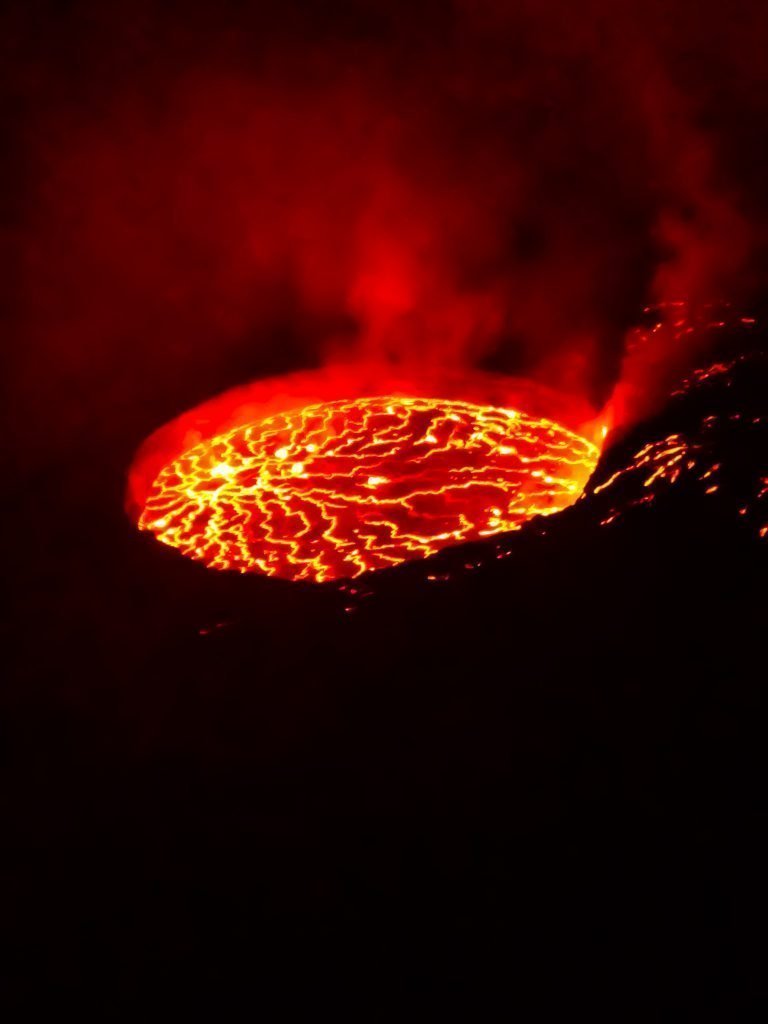
    The last section of the hike was the most exciting. Once I saw the huts at the top, I immediately had a flashback of all the previous photos I’ve seen of the lava lake when I researched it and was anxious to see it up close and personal. Once we reached the summit, I immediately went to the edge, and my mouth dropped in awe. LAVA IS SOOOO COOL!!!

    Note: I was so happy to have the hired chef because he made hot tea, which was the perfect companion for my cold hands to observe the lava.

    As the sun started setting and it became darker, the lava lake became more and more beautiful. The red color intensified and I could see the lava crackle and pop. Honestly, I could’ve stared at the lava for hours. Who needs a television, when lava can entertain you!

    Nyiragongo Volcano trek has the most rewarding view at the summit. I challenge you to find a trek that has something as sensational at the end! (Seriously, leave me a comment if you know of a cooler hike. I’m always up for new adventures!)

    The descent

    The next morning, I sadly said goodbye to the lava lake and started the 4-hour hike downwards. The Nyiragongo volcano trek has officially ended. After the hike, the guide thanked each of us for trusting the park and not canceling after the news broke out about the rangers. I tipped my chef, porter, and guards and our driver picked us up to drop us off at Goma airport for our flight at 3 pm.


    Our time in the Democratic Republic was over, and we had miraculously survived.

    Nyiragongo Trek Guide – Full logistics for booking the Congo volcano hike

    How To Book

    Hiring an external guide is not necessary, since the easiest way to book the Nyiragongo trek is through the Virunga website. Virunga has a straightforward booking process where you can purchase all permits, transport, accommodation, and visas.

    To save money, I recommend booking via my friend John Paul since he can find lower prices than the Virunga website. He will cater to your budget and is one of the most interesting men I’ve met while traveling. You can contact him on WhatsApp +243 990 622 714

    Total Expenses

    Nyiragongo trekking is expensive, but trust me – it’s worth it!

    The total expenses range from $450 to $650, depending on how many optional things you add.

    Here is the cost breakdown:

    $300 – permit for Nyiragongo Volcano Trek

    $105 – Congo Visa, which can be arranged directly with www.visitvirunga.com. Give your visa more value by also going gorilla trekking in the DRC.

    $50 to $70: Transportation to Kibati, the starting point in Virunga National Park. Kibati is only 30 minutes from Goma, yet a 4×4 is needed since the road conditions are bad. You can book transportation easily via Virunga’s website ($70), but if you want a lower price than contact John-Paul.

    $20 – $60+ : Tipping. Tipping all the guides is important – at least $10 per person. If you hire a chef and porter tip each at least $10 as well. I originally tried to tip my porter $7, because I ran out of money, and he told me that it wasn’t enough. Luckily I was able to borrow $3 from someone else, but the rangers, porters, and chef all work hard and rely on tips for their livelihood. If you can afford the trek, then you can afford to tip. 

    Optional Expenses

    $25 – Porter for 15 kg. Make your life easier and book a porter. Also, note that by booking a porter you are helping create employment for the local community.

    $100 – Extra gear package (sleeping bag, warm clothes, & rain jacket) and cook that provides breakfast, lunch, dinner, and snacks. Not necessary, but worth it.

    $10 – Locally made walking stick – Skip this purchase. My friend bought one but didn’t need it.

    Should you hire a cook and porters?  

    You can hike without hiring a cook and porter, but if you have flexibility in your budget, I recommend the package. First, once you climbed for 5 hours up the mountain, the last thing you want to worry about is making food. My friend and I, and the Penn couple were the only people who hired a chef. The food was much better than expected. Even as a budget backpacker I was happy to splurge for these added benefits.

    I also definitely recommend a porter, unless you are an experienced hiker who usually always carries your own camping equipment. If not, hire a porter and help support the local economy. Also, if you are struggling at all, your porter will always wait for you and give you words of encouragement.

    What to bring?

    If you purchase the gear package than not much else is needed. I recommend the following items:

    • Hiking Boots – Click here to review my favorite hiking boot.
    • Waterproof hiking pants
    • Hat and Gloves
    • Headlamp or flashlight
    • An extra pair of socks
    • An extra sweater – even though the package includes warm weather gear, it can get very cold at the top and it’s better to be over prepared versus unprepared.

    If you don’t hire the gear/chef package you’ll also need:

    • Sleeping bag
    • Sleeping bag liner to ensure you stay warm
    • Warm weather gear
    • Rain Jacket
    • 3L of water
    • Food – Pack lunch, dinner, and breakfast. I suggest bringing food that does not require heating up.

    If you want to cook, then you’ll also have to pack:

    • Coal
    • Cooking equipment

    Where to Stay?

    If you only plan to hike the volcano, then you can stay in Gisenyi, Rwanda the night before, in order to have more accommodation options.

    Gisenyi Recommendation: Inzu Lodge

    Backpackers recommend Inzu lodge since it offers great value. You can find a bed for <$40 and are provided with stunning views of Lake Kivu. The food also has rave reviews.

    If you also plan to go gorilla trekking as well then look at the accommodations I posted in the complete guide to gorilla trekking in the DRC.

    How to get there

    The volcano hike entrance is much closer than the gorilla trek starting point.

    The meeting place for the hike is Kibati and the briefing starts at 9:30 am.

    From Gisenyi

    Cross the Grand Barrière border right when it opens at 8 am. Contact Virunga or my friend John-Paul to ensure you have transportation from the border to Kibati.

    From Goma

    The drive to Kibati is 30 minutes. Expect your driver to pick you up from your hotel at 8 am to leave enough time.

    Additional Tips and Tricks

    • Get Allianz travel insurance. All other bloggers mention that their insurance (usually world nomads), won’t’ cover them in the DRC, but Allianz Insurance covers every country! Unfortunately, I can’t make any affiliate income from Allianz, but I always want to provide my readers with the BEST information out there for THEM and not me.
    • An East Africa Visa is terminated once you visit the DRC. Make your travel plans and purchase visas accordingly.
    • There are only two bad things from the hike. 1 )the huts smelled like pee – you’ve been warned -, and 2) Trying to find the restroom at night is hard. Bring a flashlight
    • Even though we did the Nyiragongo volcano trek during the rainy season, we lucked out and did not have one droplet. If it were raining it would have been way less pleasant, but the clothing package we purchased from Virunga National Park included a poncho.
    • Stay in Goma an extra day and go kayaking in Lake Kivu

    Pin this post to reference later!

    Looking for other unique experiences? Check out my post about spending two nights in a Maasai Village

    As an Amazon Associate I earn from qualifying purchases

    Congo Gorilla Trekking – Backpacker’s Guide to Gorilla Tours

    Congo Gorilla Trekking – Backpacker’s Guide to Gorilla Tours

    gorilla trekking uganda

    Congo Gorilla Trekking – Backpacker’s Guide to Gorilla Tours

    This article may contain affiliate links. This means that if you make a purchase after clicking on the link, I may receive a small commission.

    Before I left on my backpacking trip to Africa, I promised my mother that I would not visit the Democratic Republic of Congo (DRC), since the Congo is known for political instability, corruption, and violence. Well – sorry mom – looks like I broke that promise. Although I gave my sweet, old mother a heart attack, I am so happy that I visited the Congo because I participated in two unique travel experience. (Seriously, it is hard for me to think of a better experience). I got to meet Silverback gorillas in their natural habitat and hike to the largest lava lake in the world! In this post, I will focus on gorilla trekking in the Congo at Virunga National Park.

    Gorilla Trekking Tour – Worth the Money?

    A moment I’ll never forget – after an hour of walking through luscious, green farmlands and arriving at the top of a hill, our guide points in one direction. I look over and bam – there’s a silverback gorilla! I’m amazed, yet a bit nervous at how close I am. Observing this massive animal in his daily routine – stuffing his face with leaf after leaf – enthralls me. The ranger pulls out a machete and hacks away at a bush uncovering a mother and baby gorilla. A huge smile immediately covers my face. After the baby has had enough leaves, he starts walking my direction and passes over my feet. I stand completely still and turn my head back to the Silverback. I hope he isn’t upset that I’m so close to his family, but the Silverback is just chilling, making me realize I don’t’ have to be as nervous. Instead, I need to enjoy this unique wild animal experience.

    congo gorilla trek baby gorilla

    Gorilla trekking Rwanda vs. Uganda vs. the Democratic Republic of Congo 

    The top item on my to-do list before I stepped foot in East Africa was to go on a gorilla tour. Is gorilla trekking cheap? No way. Is it worth it? 100% yes – and I would do it again in a heartbeat! There are only 3 countries in the world where you can go mountain gorilla trekking: Rwanda, Uganda, and the Democratic Republic of the Congo. Each of these countries caters to a different type of traveler. So where did I decide to ball out and spend all my money to meet some Silverbacks? I chose the Democratic Republic of the Congo and encourage others to visit the Congo as well. There are pros and cons to each country. Take a look below at the logistics for each to make your decision.

    Rwanda Gorilla Trekking Logistics

    Traveler type: Time & comfort are more important than budget


    Location: Volcanoes National Park

    Days Needed: 1

    Permit Cost:  $1,500 USD; Discounted Permit: $1050 if visit other Rwanda national parks (Akagera and Nyungwe) for a minimum of 3 days between Nov – May. 

    1 Day Tour Cost (includes transport, lunch, permit, & guide) $1780 – $2000 USD per person 

    Visa Cost: 7-day transit visa: $30 USD; 3o-day tourist: $50 USD


    Rwanda is perfect for a traveler who has limited vacation, and wants to add gorilla trekking as a one-off experience before jetting back home. The Volcanoes National Park is only a 2-hour drive from Kigali airport, making a one-day gorilla tour possible. (You’ll just have to wake up super early at 4 am). Rwanda caters to a more polished gorilla trekking experience, since the country is clean and organized, has good infrastructure, and relatively good roads. The terrain during the trek is easier to hike when compared to Uganda. If you have more time in Rwanda and like to get off the beaten path, then I would recommend hiking the Congo Nile trail

    Pros: Easy access, easier hike, good infrastructure

    Con: The most expensive

    Travel like a Backpacker | How to save money and book a Rwanda Gorilla Trekking trip independently without a tour

    Step 1 – Get Gorilla Trek Permit: Contact the Rwanda Tourism Board to get your permits. Do this in advance – especially during high seasons (December – March, and June – September)! There are a limited amount of passes for each day. Their email is reservation@rwandatourism.com

    Step 2 – Organize Transport and Accommodation: You can either take public transport or hire a private driver to Volcanoes National Park.

    Hiring a Taxi: I recommend hiring a driver in Kigali. Even though it is slightly more expensive, it saves time and guarantees less stress. You leave at 4:30 in the morning, go gorilla trekking and come back to Kigali the same day. Hiring a driver with gas included costs ~$150-$250 USD.

    Local Bus Option: Taking local transport is the cheapest option, especially if traveling solo. You’ll need to take the bus from Kigali to Ruhengeri (1700-5000 RWF/$2- 6 USD), which takes 3 hours and runs every 30 minutes. (You can purchase tickets at the bus station).From Ruhengeri connect to Kinigi, which is 20-30 minutes away. The local bus costs 300-1500 RFW/$0.30-1.70 USD, and a mototaxi costs 2000 RFW/$2.70 USD to Kinigi. It is still necessary to have a 4WD for the gorilla trek the next day. Ask your hotel to organize transport, which should cost $80-$100. Your driver will drive you to the starting point and also wait until you finish trekking to bring you back.

    Accommodation: Budget Hotels in Kinigi range from $15- $80 a night. One recommendation is La Paillote Gorilla Camp Sit Campground. 

    Click here for current prices and details on La Paillote. 

    If you want to stay in Ruhengeri then The Amahoro Guesthouse ($30 per night) is a good option.

    Click for more details on Amahoro Guesthouse.

    Uganda Gorilla Trekking Logistics

    Interested in adding other safaris, has more time, and in decent physical shape


    Location: Bwindi National Park

    Days Needed: 3

    Permit Cost:  $700 USD 

    3 Day Tour costs (includes transport, food, accommodation, permit): $1600 USD

    Visa Cost: 7-day transit visa: $30 USD; 3o-day tourist: $50 USD


    Uganda is ideal for travelers who have more time flexibility, and want to go on additional safaris. It is possible to travel independently, but save yourself the burden and choose from the numerous gorilla tour operators who will organize permits, transport, and accommodation. Also, spending money on a tour helps the local economy. If you are on a budget, I recommend booking with Seith at Bwindi Backpacker Lodge. He is responsive to emails and offers a lower cost option for gorilla trekking. A bed costs $15 a night, and he can organize a taxi from Kabale for ~$100 plus fuel.

    It takes a full day (9 hours) to drive from the international airport to Bwindi National Park. I’d recommend extending your holiday in Uganda, staying for one or two weeks to see everything the country has to offer. Combine the gorilla trek with other popular attractions like canoeing in Lake Bunyonyi (which inspired Wakanda in the movie Black Panther), or a game drive in Queen Elizabeth National Park to see the tree climbing lions.

    For super gorilla fans, there is also a habituation trek, which is limited to 4 people per day and last 4 hours instead of 1 hour like the other gorilla tours. The permit cost is $1,500. A habituation trek differs because the goal is to get the wild animals used to the sight of people.

    Pros: Cheaper than Rwanda, Safer than the DRC

    Con: Harder trek, Park is far away

    (Short on time – here’s a tip: Check the option of flying into Kigali, Rwanda instead of Entebbe, Uganda. Bwindi is only 4 hours from Kigali, so the drive to the park is shorter, but there is an additional visa cost for Rwanda.)

    Interested in a Group Trip to Uganda?

    Join the Follow The Fro to Gorilla Trekking tour next February 2021!

    If you want to support a local Uganda tour agency and travel with Kesi and other adventurous souls, then sign up!

    Democratic Republic of Congo Gorilla Trekking Logistics

    Traveler Type: Budget-conscious, adventurous


    Location: Virunga National Park

    Days Needed: 2

    Permit Cost:  $400 USD or $200 USD during rainy season (Mar 15 – May 15)

    2 Day Tour costs (includes transport, accommodation, permit): $650 – $750 USD

    Visa Cost: 7-day visa: $105


    Pros: Cheapest option

    Con: Country is unstable, the park can close if there are safety concerns

    The Democratic Republic of Congo is perfect for an experienced traveler who likes to get off the beaten path and wants the cheapest gorilla trekking option. Since I did the gorilla trek in the DRC, I have the most information and will go in-depth about my experience in the section below. Visiting the gorillas in Congo is highly recommended. 

    Complete Guide to Gorilla Trekking in the Democratic Republic of Congo

    democratic republic of congo gorilla trek

    Why you should visit the Congo?

    Initially, two reasons convinced me to go gorilla trekking in the Congo:

    1. Hello! I’m a backpacker who is always looking to save money – it’s the cheapest place!

    2. I also wanted to hike the Mount Nyiragongo Volcano, so might as well kill two birds with one stone.

     After I completed the trek, there became even more reasons why the Congo is the best place to visit for a gorilla tour.

    3. Easy Booking Process: Virunga National Park is very organized, and all logistics can be booked directly with the park, without the need for a tour agency or middleman. There are options to apply for a visa and book gorilla permits, accommodation, and transport all on its website. I tend to be a last minute planner but recommend booking at least a month in advance, to ensure there is space. Also, visas can take up to 1-2 weeks to process.

    4.  John Paul aka The Best Guide Ever! The transportation and accommodation options on Virunga’s site were above my budget. I searched for a Couchsurfing host in Goma and was lucky to find John Paul. (Check out his Couchsurfing references here). Although he couldn’t host at his home, he went above and beyond to make sure that my friend and I were taken care of during our visit to the Democratic Republic of Congo. Before we even met JP, he was proactively helpful. We ordered our visas and gorilla permits online on our own, and he visited Virunga’s office on our behalf to ensure everything was running smoothly. Then he insisted on meeting us at the border to help guide us through Goma. The bus from Kigali took longer than expected and JP patiently waited over an hour for us at the border, and still greeted us with a warm smile and showed zero signs of annoyance. John Paul sorted a cheap hotel after asking for our price range and specifications (aka – must have Wi-Fi), and also arranged a cheaper taxi to the gorilla trek. Not only was he organized and supportive, but also was a fascinating person. Congo has an unstable history and having a local to talk to about the political climate, daily life, and what it means to be Congolese is precisely the reason I travel – to meet new people and hear their perspectives of life.

    John Paul makes his living by organizing tours in the DRC. I cannot recommend him enough! He will find you the best prices, and all the money you spend helps to support the local entrepreneurs in Goma, Congo. Check out my interview with John Paul in The Local Lingo section on my site.

    The moment you decide to visit the DRC contact John Paul on Facebook, or Whatsapp: +243 990 622 714

    5. Virunga National Park needs tourist money. The Congo gorilla tours and permit cost support Virunga National Park’s conservation efforts and makes a more significant impact in the Congo versus other gorilla trekking countries. Rangers risk their lives daily to protect the wildlife and nature from poachers and rebels. Unfortunately, ranger deaths are common (not in the same area where tourists go). There have been 170 rangers killed in the past 20 years – making this park the most dangerous conservation project. Tourism is low since people are afraid to visit the DRC. Our guide at the end of our trek told us if we felt safe and enjoyed our time then we should outreach and encourage others to visit the Congo. So here is my plea! Spend your money in the DRC! The mountain gorilla population has increased to 1,000, and to keep protecting these animals it’s important to support Virunga National Park financally.

    Wait…is the Congo safe?

    People are always shocked when I tell them I went to the Democratic Republic of the Congo. “Wait, isn’t the Congo very dangerous? Why would you go there?” Although I am well traveled, I too was a bit nervous about venturing to the Congo. I questioned if it was stupid to go to a country tormented by civil wars and distrust in the government. Yes – the Congo is a dangerous place, but Goma is generally safe for tourists, and Virunga National Park prioritizes keeping visitors protected. If there are ever any safety concerns, the park will close. When I researched the park, there had been no attacks against tourists in the past 20 years, so I was comfortable to go trekking.

    Unfortunately in May 2018, right after I visited Virunga National Park, two British tourists were kidnapped for 48 hours. They were unharmed and released safely. Virunga closed the park to tourists to reevaluate and establish robust measures to ensure the safety of the animals and visitors of the park. The park reoponed in February 2019, and I still encourage to visit Virunga.  

    silverback gorilla trek congo

    Transportation to Virunga National Park

    Start in Kigali, Rwanda: Kigali is the most accessible city to enter by either a flight or a bus. Kigali feels western, so it’s a comfortable place to spend the night. Spend at least a day in the city and visit the Genocide Memorial. This experience is somber, yet also a compelling one. The genocide is an essential time in recent history, which has also directly affected life in the DRC. BBC wrote an article about the domino effect of the genocide in the Congo.

    Kigali to Gisenyi, Rwanda – Border Crossing: There is a local minibus that frequently runs from Kigali to Gisenyi that takes ~3/4 hours. There are two border crossings: the Petite Barrière and the Grand Barrière. Even though the Grand Barrière is open until 10 pm, I would recommend leaving Kigali before 3 pm to have enough time to cross the border. Remember…this is Africa, transportation & logistics always take longer than expected.

    Goma: After crossing the border find a mototaxi to take you to your hotel in Goma. There are plenty of mototaxis by the border. I recommend spending the night in Goma since there is cheaper accommodation than in Virunga National Park.

    Goma to Bukima (Virunga National Park Gorilla Entrance): Find a private driver to Bukima. It is necessary to have a proper 4WD car because the roads are in bad condition. John Paul organized a driver for us for $120. It’s also possible to book transport through the Virunga website; it’ll just be more expensive – $188. I can’t recommend enough contacting John-Paul to organize your gorilla tour. He has the best prices and is trustworthy.

    Where to stay

    The night before the gorilla trek you can stay in Goma – the cheapest option, Virunga National Park – the more luxury option, or Bukima – the closest option.

    Click here to find the latest hotel prices and book a place to stay.

    La VersaillesBudget Room in Goma

    We told John Paul that we wanted the cheapest room, but also Wi-Fi and he recommended staying at La Versailles. A double room cost $30 per night and included breakfast. This accommodation is simple but easy to reach in Goma and good value. The price is higher on booking.com, so I’d recommend using John Paul to book. 

    Rated 3 out of 5 stars on TripAdvisor

    Lac Kivu LodgeFlashpacker Room in Goma

    Situated on the lake in Goma, Lac Kivu is a good option for a flashpacker who wants more comfort and a beautiful view, but not spend an excessive amount of money. Prices start at $80 USD for a room.

    Rated 4.5 out of 5 stars on TripAdvisor

    Mikeno LodgeLuxury Room in Rumangabo

    An expensive, high-end lodge with amazing scenery situated between the gorilla trek and volcano hike. It is an ideal location to stay the night between the two activities.

    Rated 5 out of 5 stars on TripAdvisor

    Bukima Tented CampGlamping right next to gorilla trek entrance

    Located within walking distance to the gorilla trek, this is a luxury option for individuals who like nature and want convenience. If you are lucky, maybe a gorilla will walk by during your stay.

    Rated 4.5 out of 5 stars on TripAdvisor

    What to pack

    Remember – you are hiking in the wild, so make sure to have the proper equipment to enjoy the experience fully. Here is a list of items I would recommend. You can find all of these suggested items on Amazon.

    • Hiking Boots – It is possible to trek in sneakers, but hiking boots are best especially if it rains. I was lucky, and my hike was not strenuous, but I was happy that I had hiking boots since some parts were muddy. Click here to review my favorite hiking boot.
    • Long Pants – Do not wear shorts, unless you like having weeds scratch you. Click here for travel pant suggestions.
    • Walking Stick (Optional) – I did not think a hiking stick was needed, but my friend Jordan bought one at the gorilla trek entrance for $5, and she was happy to have it.
    • Best Camera You Own – When else will you be this close to silverback gorillas. Be prepared and invest in a high-quality camera. I only travel with my smartphone, but luckily l was my friend Jordan who had a DSLR when I backpacked in Africa.  Click here for DSLR camera suggestions.
    • Poncho – Just in case it rains, especially if you are going during the rainy season
    • Selfie Stick – Who doesn’t want a gorilla selfie?! Here is the cheap selfie stick I use for my Pixel 2 phone
    • Water Bottle – I travel with the LifeStraw water bottle since it allows me to drink tap water anywhere. Click here for prices and more detail. 
    • Cash for tips – Make sure to tip your guide!

    What to pack for gorilla trekking?

    Click here to read an updated and comprehensive gorilla trekking packing list

    mother gorilla trek congo

    The Congo gorilla trek experience – What is the day like?

    6:15 AM – my alarm starts going off. I’m not usually an early riser, but today was easy to wake up because it was gorilla trekking day! At 6:30 AM John Paul arrived at our hotel and introduced us to his friend who would drive us to Bukima. Since I came to Goma late the previous night, I had no idea how it looked. I jumped in the back of the Jeep and felt a sense of adventure driving around the city. I kept thinking to myself, “Am I really in the DRC, right now?” Yes! Yes I was, and I felt completely safe. Looking out the window, I saw busy streets – boys were carrying heavy logs on human-made bikes, women dressed in bright patterns selling food in the market, and UN trucks driving around. I looked straight ahead, and we were headed towards the Mount Nyiragongo volcano, which was an unbelievable background view for a city. I had only been in the car for 5 minutes, yet was already blown away by Goma’s beauty!

    Our driver turned to me and asked, “Have you ever had an ‘African Massage’?” I have already been traveling for 1.5 months in East Africa, so I knew that question meant we were headed to streets filled with potholes. For 1-2 hours we endured a long, bumpy ride or “African Massage” to the gorilla trek entrance point. I still loved the experience though, because each time I looked out the window, the locals would be smiling and waving at me, especially the kids. Sharing smiles tend to put me in a good mood.

    When we arrived at Bukima around 8 am there was a diverse mix of 20ish people from Russia, Bangladesh, Australia, Canada, and the USA, all of whom were just as excited as us for the day. We checked in with our gorilla permits and sat down, waiting for the gorilla trek introduction. One of the rangers explained the logistics for the trek and described the different families in the park. We split into groups ranging from 4 to 6 tourists, 1 guide, and 2 additional rangers. My friend, Jordan, decided to buy a walking stick for $5 since it looked pretty cool. In hindsight, it wasn’t necessary since the trek was easy and only lasted an hour before we reached the gorilla family. (The other groups also said their treks were relatively easy and took 1 to 2 hours to find the gorillas). I already described my first interaction with the Congo gorillas at the beginning of this blog post, but I’ll reiterate that being so close to Silverback gorillas and their family is one of the top experiences I’ve ever had!

    The most surprising elements were:

    • How similar the primates looked to us – humans share 95-99% of the same DNA. During the gorilla tour, I felt like I was looking in a mirror (- ok, maybe I’m slightly prettier). To observe a wild animal and the physical similarities, like hands and thumbs, to humankind was “funnily surreal.”
    • The gorillas’ behaviors were similar to humans. At one point it started to rain, and the mother immediately picked up her baby and walked into a more covered area. Well, Miss mother gorilla – I feel you, I also don’t like to get my hair wet!
    • How much the gorillas farted! Seriously every 5 minutes I’d hear a release of gas.

    silverback gorilla farting

    Gorilla trekking during rainy season

    Should you do a gorilla trek in the Congo during the rainy season? Since I am a backpacker that means I have a tight budget, so when I saw the gorilla permits were half the price – $200 – between March 15 to May 15, I knew that was the time I wanted to go. Although it was the rainy season, we got lucky and experienced no rain during the gorilla trek. It also didn’t rain at all the next day during the Nyiragongo volcano trek. It rained at nights while we were there, but the weather did not impact our journey. I don’t think rain would hinder the experience (i.e., you will still find the gorillas), but it would be an annoyance. Don’t let rainy season stop you, just be prepared with proper footwear, a poncho, and an umbrella to hide under to take photos.

    virguna national park congo

    Things i wish i knew before

    • Do not fly out of the Goma – The airport is small, and they try to get additional money out of Westerners. Most people choose to fly out of Kigali, but since I used airline miles, I decided to fly out of Goma. When I arrived at the airport, I was surprised that I needed to pay an additional $50 departure tax in cash. The airport staff also wanted to charge me for extra shots, even though I had my yellow fever vaccine card. I assured them that since I am from the US, I already had all the necessary vaccinations and did not need them to stick any needles in me! I could tell they thought they could take advantage of me.
    • Use John Paul as soon as you decide to visit the Congo. Seriously, he will organize everything for you and make you feel comfortable in a country that has many negative associations.
    • An East African Visa is voided once you enter the Congo.
    • To cross the border, you need to show your yellow fever vaccine card.
    • Spend more time in Goma. I only planned to stay in Goma for two nights for the gorilla trek and volcano hike, but I would’ve loved an extra day or two to explore Goma, and kayak on the lake.
    • I wish I were more knowledgeable about Congo’s complicated history. Then I would have had more enlightening conversations with the locals. I highly recommend watching the movie This is Congo, an unfiltered documentary that follows the life of 4 Congolese affected by the ongoing conflicts.

    Gorilla Trekking Congo? Just do it! Here’s a video from my experience.

    Pin this post to reference later!

    As an Amazon Associate I earn from qualifying purchases.

    Inca Trail Booking 101

    Inca Trail Booking 101

    The Inca Trail hike with my 66-year-old mother is be an experience I will never forget.  Before I started my RTW journey I asked my mom if she wanted to do the Inca Trail trek and Machu Picchu together. She immediately said yes, even though she had no idea what the trek entailed and wasn’t too sure what Machu Picchu was either. My mom thought we would be staying in hotels, but instead we spent 4 days and 3 nights hiking and camping 3000m above sea level. The Inca Trail was definitely hard, but also rewarding. There is so much history on the paths we walked, and every morning waking up in the clouds I felt accomplished. Sharing this experience with a loved one is unparalleled. Look below for Inca Trail booking tips!

    When to book the Inca Trail hike

    Early! If you want to book the Inca Trail you must book in advance, since there are only 500 passes available per day. During peak season I would recommend booking at least 6-7 months in advance. For example when I checked availability on March 6, 2016 all passes were sold out until August 24, 2016. During rainy season (November – January) I would recommend booking at least 4 months in advance, although sometimes people were able to find availability one month in advance. (Note: The Inca trail is closed in February). You can find availability on this site: Inca Trail Availability  

    Best Inca Trail tour companies

    1. Best Value Option: X- Treme Tourbulencia

    I have the most information for this tour group since I booked with them. X-Treme Tourbulencia is the cheapest option and has good reviews. I would recommend this tour, but if I were to do the Inca Trail again I would go with Llama Path.

    Cheapest Option: $490 + $60 for porter Delicious Food:  I was amazed by how good the food was. There was always more than enough and great presentation skills. (i.e – making a parrot out of a cucumber and some carrots) Great Guide: Our guide was very passionate and proud of his heritage and the history of the Inca Trail. It was interesting to have a guide who shared a connection with the Aztecs. Small Group: The total group size was 5, which was really nice since I was with my mom. If I was traveling solo I would’ve wanted a bigger group, but since I had my mom a smaller group was more intimate and felt like a private tour.
    DisorganizedThe company does not give a lot of information before the trek and is slow at responding to emails. Often times the prices would be different on various bills that they sent.
    One of the Inca sites during our 4 day Inca Trail hike

    During my trip I crossed paths with various tour groups and Llama Path stood out from the rest.  You could tell everything was tightly organized and that the porters were treated better than other tour groups. (The porters have a very hard job carrying 20 kg of camping supplies everyday and running through the Inca Trail in order to set up lunch and dinner before their groups arrive).  Llama Path offers a bit more luxury than X-treme Tourbulencia, for example after 8 hours of hiking I would walk by the Llama Path tents and see that their air mattresses and sleeping bags were already made, whereas with my tour group I would have to set up my sleeping bag myself. The cons with Llama Path are that is is more expensive and has a larger group. Even though Llama Path is more expensive ($675 + $90 for porter), it is worth the extra ~$200. The Inca Trail is a once in a lifetime experience, so paying extra to get the best of the best is not that much in the grand scheme.

          3. Highly Recommended Option: Alpaca Expeditions

    Alpaca Expeditions is another great option to book the Inca Trail. They are ethical and pay their porters a good wage. It’s well organized, they really take care of you and the food is amazing (Option to have gluten free food) . This trek is also more expensive ($650 + $ for porter).

    Inca Trail Tips Before Going

    1. Rent walking sticks and sleeping bags once in Cusco, it will be much cheaper, than booking through the tour agency
    2. Arrive in Cusco 48 hours before your hike to get acclimated to the high elevation.
    3. Buy Coca leaves or coca products and other snacks for your trek.
    4. Hire a porter – unless you are an experienced hiker.
    Highlights of Inca Trail Trek
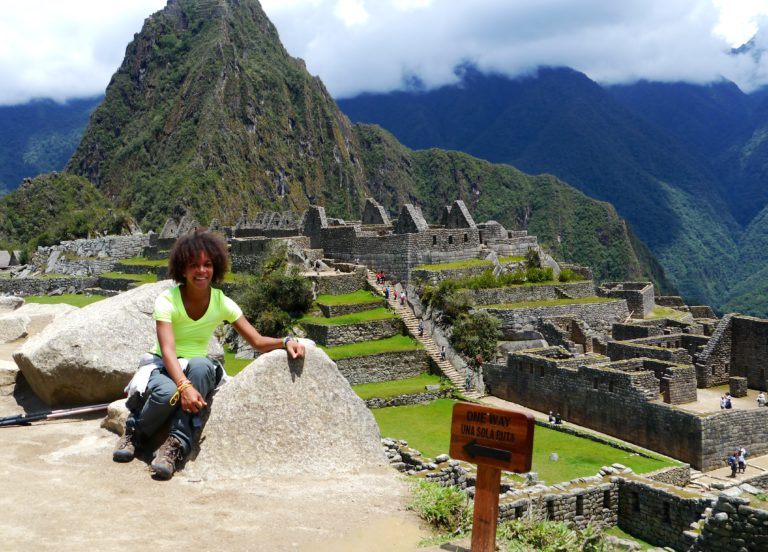
    • Everyone knowing me and my mom: My mom and I stuck together the entire trek and I guess we are memorable since I have an afro and my mom was the oldest one out there. When we finally got to Machu Picchu, people from other tour groups would clap for us and we had countless people come up to us to congratulate us for finishing.
    • Finally reaching Machu Picchu – I wouldn’t want to see Machu Picchu any other way. After hiking for 4 days Machu Picchu was the perfect ending and reward.
    • Sipping champagne after a 3 hour vertical hike to Dead Woman’s Pass.
    • Walking on a path with so much history and being able to see several Inca Ruins.
    • Meeting the porters at the end. The porters are amazing, and although they only speak Quechua, on the last night it was nice to learn more about them.
    • Meeting llama
    Worst Parts of Inca Trail Trek
    • Bathroom situation especially when you have the runs
    • The second day is very a long and tough day.
    • Unfortunately the moment we got to Machu Picchu clouds came

    Alternative Options to Machu Picchu

    If you didn’t book the Inca Trail in advance, do not fret, there are other hiking options once you get to Cusco. I spent a month in Cusco and I heard the most about these treks: Lares Trek, Inca Jungle Trek, and the Salkantay Trek. All of these options are cheaper than the Inca trail trek, yet you will not see as many incan sites on the way to Machu Picchu.  You can book these alternative treks with a tour agency in Cusco. There are also train options to get to Machu Picchu that can be done in 1 or 2 days, but my advice is to hike to Machu Picchu. The whole hiking experience makes Machu Picchu more worth it. Machu Picchu is extremely touristy and crowded, so going on a trek allows scenic views without the crowd.

    Pin It on Pinterest