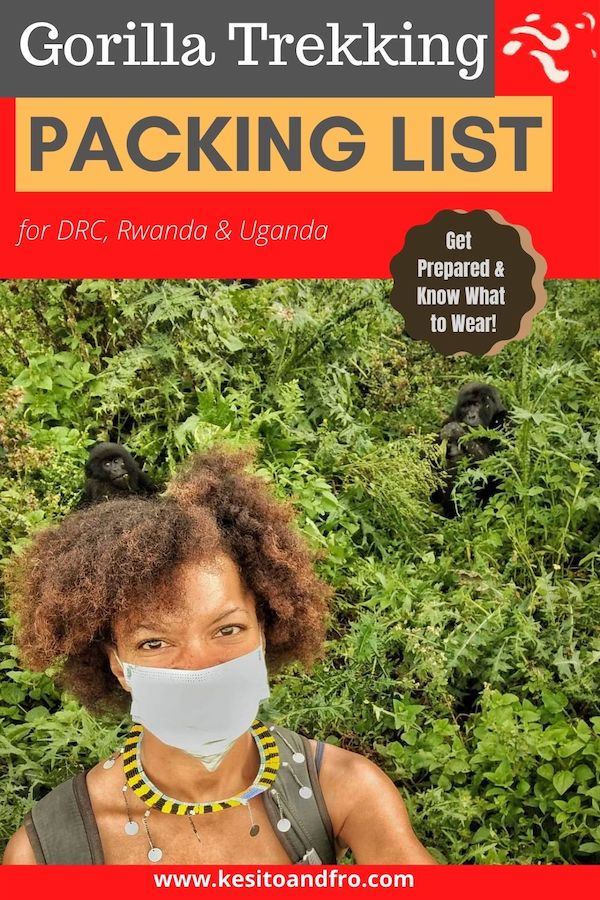
If you have this question, you have made it to the right page. I have compiled the ultimate gorilla trekking packing list for you.
In this “Gorilla Trekking Packing List” guide, I let you know what to pack for gorilla trekking so you don’t make the mistake of showing up in shorts and sandals.
To find gorillas in their natural habitats, you have to trek through thick vegetation in the rainforest. Oftentimes there is no trail, and guides even carry machetes to cut through the terrain. It’s important to be prepared and bring the right items.
I have gone on gorilla tours in both the DRC and Uganda, and it seriously is one of the best activities I’ve ever done.
P.S – I am returning to Uganda for the 4th time to run a group trip in 2025.
personal experience gorilla trekking in the DRC once and Uganda four times.
Although the landscape varies slightly depending on the park you visit, this gorilla trekking packing list applies to Uganda, Rwanda, and the DRC.
Note: The hikes in Uganda are more strenuous and tend to take longer.
Gorilla Trekking Packing List
This post may contain affiliate links, which means I may receive a commission, at no extra cost to you, if you make a purchase through a link. Please see my full disclosure for further information.
WHAT TO WEAR GORILLA TREKKING
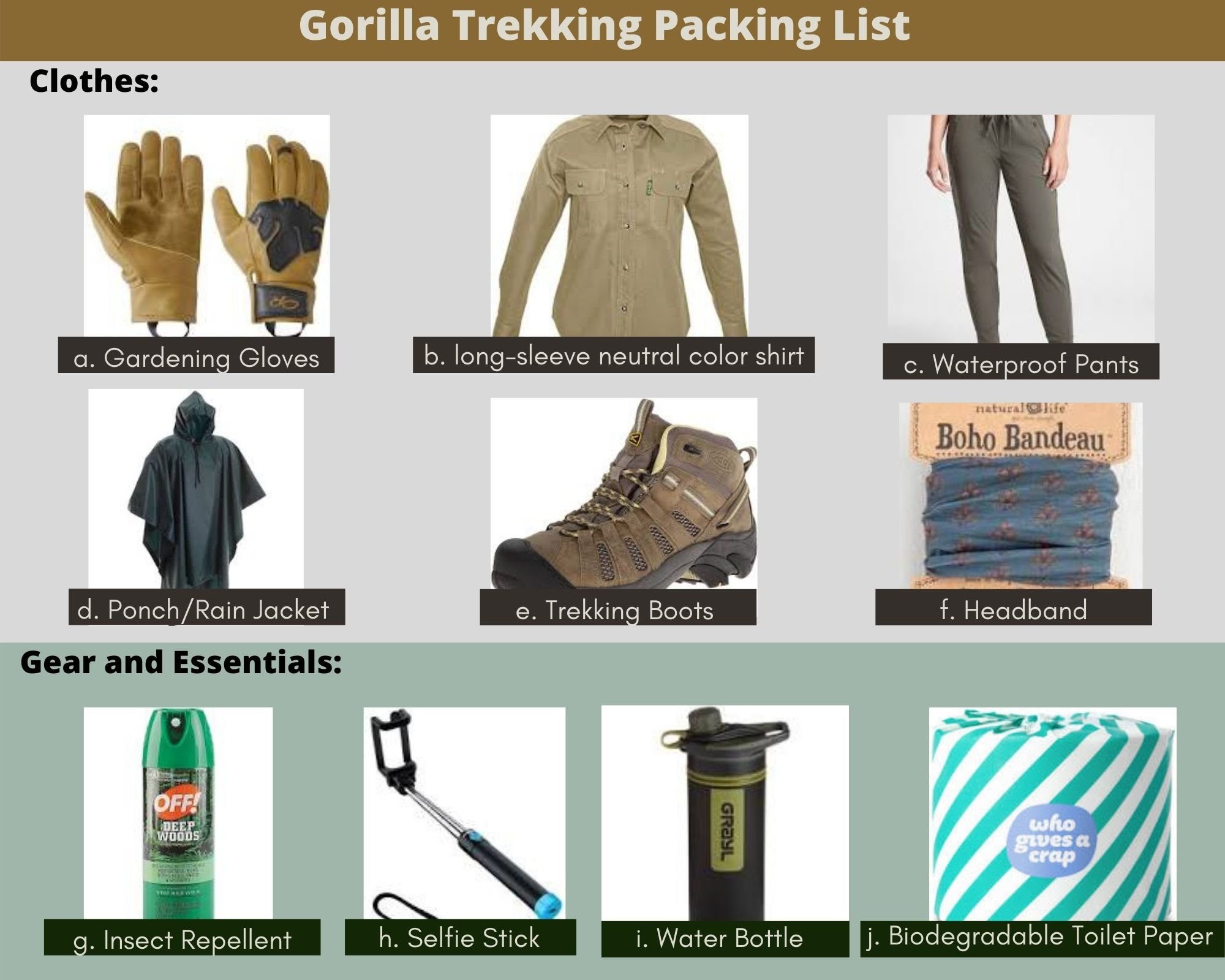
Before I go into the detailed list, here’s an infographic of the main items I recommend. You can find a link for each item below.
Infographic: Gorilla Trekking Uganda – What to Wear
It’s possible to go in regular sneakers, but waterproof hiking boots are highly recommended because you never know which terrain you will be in. Trails can get muddy, and it’s possible to hike up to 8 hours. Hiking boots provide ample ankle support.
In Uganda, we had to follow gorillas down a hill filled with vines. I was thrilled to have hiking boots!
This might seem overkill, but remember, you are in a rainforest and not following a trail. Gardening gloves help navigate through thick, tangled vines and allow you to grab onto plants and tree branches for support while hiking. Gloves are helpful and provide protection from nettles and thorns.
When I trekked the DRC, gardening gloves weren’t needed because the vegetation was manageable, but gloves are recommended for Uganda and Rwanda.
Wear clothes that blend in with nature, like greys, browns, and greens. DO NOT wear bright colors, camouflage, or animal prints. You don’t want a silverback to mistake you for a leopard.
Long Pants: Long trousers will protect you from things like scratches and ants. If the pants are water-resistant, that’s even better.
I highly recommend Athleta’s Trekking North Jogger pants! Both times I went gorilla trekking, I hiked in these, and they were great. I love these pants since they are versatile. They are practical to hike in, yet also stylish enough to wear every day.
Long-Sleeved Shirt or Jacket: Even if you get hot, it’s wise to protect your arms from insects and plants with thorns.
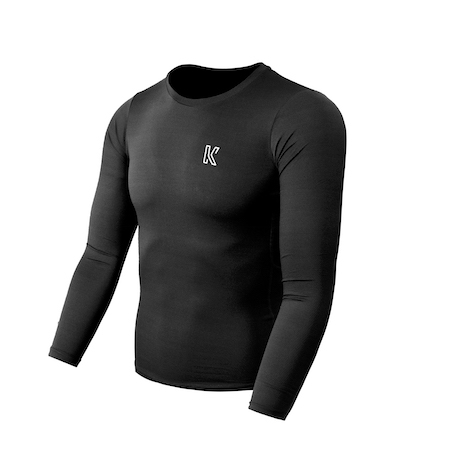
If you are looking for breathable and sustainable clothing, I recommend the brandKoup. I love their shirts, and honestly, if you purchase the long-sleeve shirt, you don’t have to stress about getting too hot. The fabric is very light! They have shirts for both men and women.
Optional:Short-Sleeved Shirt: If you want to wear layers, you can also get a short-sleeved shirt. Note: exposed skin will get scratched, but there are parts of the hike where you don’t have to worry about spiky thorns and insect bites. I also recommend Koup.
Leg Gaiters– Don’t know what a gaiter is? Neither did I, until I went gorilla trekking! Leg gaiters are recommended for Uganda and Rwanda treks. Gaiters help keep all the critters away from getting underneath your socks or pants.
Tall Socks – Tuck your trousers in your socks. My favorite sock brand is Bombas. Seriously, these socks are amazing and keep your feet dry if there is rain.
Rain Jacket or Poncho: No matter if you trek in the dry or rainy season, you are in a rainforest, so rain is unpredictable and can fall at any time. A rain jacket is handy.
Headband and Hair Ties: I recommend getting a bandeau since it has multiple uses (headband, scarf, mask). For hair ties, you must purchase from Soulvation Society. These hair ties are comfortable and versatile – they double as bracelets, so more bang for your buck! Plus, the company is owned by a bad-ass female #SupportSmallBusinesses
Camera: This is a once in a lifetime experience! Bring a good camera to capture this once in a lifetime experience. I recommend the Sony Alpha A6000. It’s a mirrorless camera that is great for beginner photographers.
Water Bottle or Camel Pouch: I always travel with a filtered water bottle since it allows me to drink tap water from all over the world. I have used both LifeStraw and GRAYL. I recommend the GRAYL bottle, and you can read my full review here.
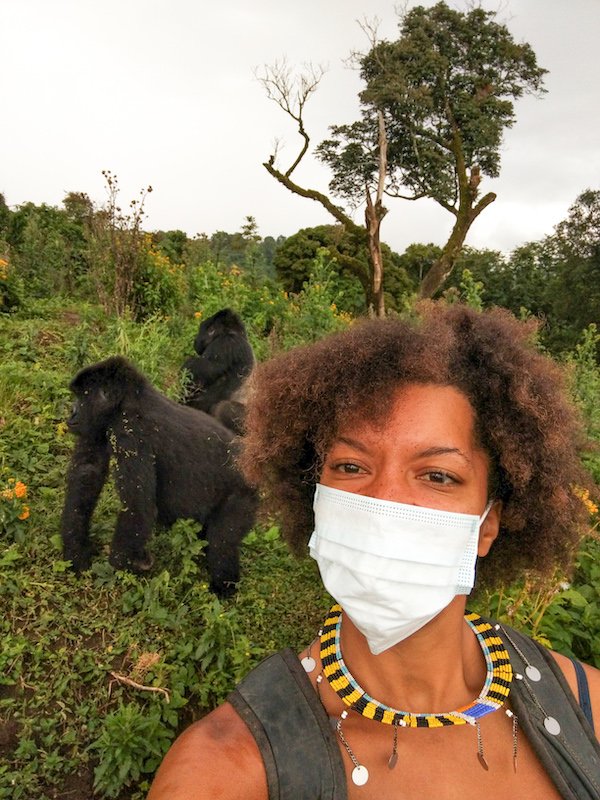
Selfie Stick: Who doesn’t want a gorilla selfie?! Smartphone cameras are a great way to catch a selfie. When I was in the DRC I used the Pixel 2 phone and captured photos like this:
Binoculars: Although not necessary for gorilla trekking, it’s wise to have binoculars if you are going on other safaris throughout Uganda. The binoculars linked below also have a universal phone adaptor, so you can easily take pictures through the binoculars.
Lunch or Snacks – Gorilla trekking is unpredictable, it can take 30 minutes or 8 hours to find a family. You can purchase some energy-producing snacks once in Rwanda or Uganda.
Sunglasses
Documents and Money
Passport (with 6 months validity)
Local Currency: to tip your guide ($10 for each guide)
Money Belt
Yellow Fever Vaccine Card
Gorilla Permit (Your tour company will provide)
PRE/POST TREKKING ESSENTIALS
Here is a list of items that will be useful to have before and after the gorilla trek.
Sweater:Yes, even in Africa, you need a sweater. It can get cold in the mornings and evenings in the parks.
Travel Scarf: Another option to keep you warm. I love the WayPoint Goods travel scarf because it’s comfortable, has cool designs, and doubles as an inconspicuous purse!
Sandals: Chacos are my go-to travel sandal. They are extremely practical and long-lasting. I wear mine almost every day.
Swimwear: Many of the hotels have pools to enjoy after a day of trekking.
FAQ
Q: What To Wear Gorilla Trekking In Uganda?
If you are looking for an Uganda packing list, tall socks are among the most essential things to pack. There are many creepy crawlers in Bwindi, so you want to make sure no ants climb into your shoes. I also recommend gardening gloves and hiking boots since the trek takes longer in Uganda. Mgahinga National Park is at a higher altitude, so it can be colder than other parks. Be sure to bring a sweater for chilly evenings.
Also, Gorilla trekking is not the only attraction in Uganda. I recommend spending at least one week in Uganda to explore the beauty of this underrated country. I am hosting a 8-Day tour throughout Uganda; click here for more details.
Q: What To Wear Gorilla Trekking in Rwanda?
Volcanoes National Park is at a higher altitude so that it can get colder. Bring a sweater for chilly evenings. Also, gaiters are recommended to protect from stinging nettles.
Q: What To wear Gorilla Trekking in DRC?
My trek in the DRC was pretty easy and only took an hour. Gardening gloves are not necessary.
Q: Do I need to bring anything extra due to COVID?
A Negative covid test ( taken 72 hours prior to arrival in Uganda)
A mask (preferably a surgical or N95 type). The DRC always required a mask even before COVID, to protect the gorillas against human viruses.
Q: What travel insurance to buy for gorilla trekking?
RoamRight is a great, affordable insurance option with excellent customer service. RoamRight annual plans start at ~$200 per year, which is wise if you go on more than one trip per year. It’s $135 for an annual plan.
I hope this gorilla trekking packing list was useful! In the comments, let me know if you have any questions.
Also, congrats! You have made the best decision to see silverback gorillas and their families in Africa!
Pin This Post and Read it Later!
Want To Learn How To Sustain Long-Term Travel?
Kesi quit her finance job and traveled the world for 5+ years, making her a long-term travel expert. If you want to learn how it’s possible to plan for a gap year, career break, or become a professional traveler, then subscribe to the #FollowTheFro newsletter
Airalo Review An Honest Airalo eSIM Review After 10+ Years of Travel & Saying Goodbye to Physical SIMs Forever Travel Gear | Read Time: 12 minutes Airalo Unlimited eSIM Review – Table of Contents Quick Facts| Features Ranked| Why Airalo?| What is an Unlimited…
Clothes For Antarctica Packing Lists | Read Time: 10 minutes Clothes For Antarctica – Table of Contents Quick Summary | Clothes That Keep You Dry | Clothes That Keep You Warm |Clothes For The Boat| Other Gear “What to pack for Antarctica?” Are you planning a trip to…
How To Be a Travel Blogger and Make Money Tips from a 6-Figure Travel Blogger Make Money Traveling | Read Time: 10 minutes Foward by Kesi I am very excited to start a new series – “The Long-Term Travel Chronicles” – where adventurous souls share how they are able to…
As an Amazon Associate, I earn from qualifying purchases
Congo Gorilla Trekking – Backpacker’s Guide to Gorilla Tours
This article may contain affiliate links. This means that if you make a purchase after clicking on the link, I may receive a small commission.
Before I left on my backpacking trip to Africa, I promised my mother that I would not visit the Democratic Republic of Congo (DRC), since the Congo is known for political instability, corruption, and violence. Well – sorry mom – looks like I broke that promise. Although I gave my sweet, old mother a heart attack, I am so happy that I visited the Congo because I participated in two unique travel experience. (Seriously, it is hard for me to think of a better experience). I got to meet Silverback gorillas in their natural habitat and hike to the largest lava lake in the world! In this post, I will focus on gorilla trekking in the Congo at Virunga National Park.
Gorilla Trekking Tour – Worth the Money?
A moment I’ll never forget – after an hour of walking through luscious, green farmlands and arriving at the top of a hill, our guide points in one direction. I look over and bam – there’s a silverback gorilla! I’m amazed, yet a bit nervous at how close I am. Observing this massive animal in his daily routine – stuffing his face with leaf after leaf – enthralls me. The ranger pulls out a machete and hacks away at a bush uncovering a mother and baby gorilla. A huge smile immediately covers my face. After the baby has had enough leaves, he starts walking my direction and passes over my feet. I stand completely still and turn my head back to the Silverback. I hope he isn’t upset that I’m so close to his family, but the Silverback is just chilling, making me realize I don’t’ have to be as nervous. Instead, I need to enjoy this unique wild animal experience.
Gorilla trekking Rwanda vs. Uganda vs. the Democratic Republic of Congo
The top item on my to-do list before I stepped foot in East Africa was to go on a gorilla tour. Is gorilla trekking cheap? No way. Is it worth it? 100% yes – and I would do it again in a heartbeat! There are only 3 countries in the world where you can go mountain gorilla trekking: Rwanda, Uganda, and the Democratic Republic of the Congo. Each of these countries caters to a different type of traveler. So where did I decide to ball out and spend all my money to meet some Silverbacks? I chose the Democratic Republic of the Congo and encourage others to visit the Congo as well. There are pros and cons to each country. Take a look below at the logistics for each to make your decision.
Rwanda Gorilla Trekking Logistics
Traveler type: Time & comfort are more important than budget
Permit Cost: $1,500 USD; Discounted Permit: $1050 if visit other Rwanda national parks (Akagera and Nyungwe) for a minimum of 3 days between Nov – May.
1 Day Tour Cost (includes transport, lunch, permit, & guide): $1780 – $2000 USD per person
Rwanda is perfect for a traveler who has limited vacation, and wants to add gorilla trekking as a one-off experience before jetting back home. The Volcanoes National Park is only a 2-hour drive from Kigali airport, making a one-day gorilla tour possible. (You’ll just have to wake up super early at 4 am). Rwanda caters to a more polished gorilla trekking experience, since the country is clean and organized, has good infrastructure, and relatively good roads. The terrain during the trek is easier to hike when compared to Uganda. If you have more time in Rwanda and like to get off the beaten path, then I would recommend hiking the Congo Nile trail
Pros: Easy access, easier hike, good infrastructure
Con: The most expensive
Travel like a Backpacker | How to save money and book a Rwanda Gorilla Trekking trip independently without a tour
Step 1 – Get Gorilla Trek Permit: Contact the Rwanda Tourism Board to get your permits. Do this in advance – especially during high seasons (December – March, and June – September)! There are a limited amount of passes for each day. Their email is reservation@rwandatourism.com
Step 2 – Organize Transport and Accommodation: You can either take public transport or hire a private driver to Volcanoes National Park.
Hiring a Taxi: I recommend hiring a driver in Kigali. Even though it is slightly more expensive, it saves time and guarantees less stress. You leave at 4:30 in the morning, go gorilla trekking and come back to Kigali the same day. Hiring a driver with gas included costs ~$150-$250 USD.
Local Bus Option: Taking local transport is the cheapest option, especially if traveling solo. You’ll need to take the bus from Kigali to Ruhengeri (1700-5000 RWF/$2- 6 USD), which takes 3 hours and runs every 30 minutes. (You can purchase tickets at the bus station).From Ruhengeri connect to Kinigi, which is 20-30 minutes away. The local bus costs 300-1500 RFW/$0.30-1.70 USD, and a mototaxi costs 2000 RFW/$2.70 USD to Kinigi. It is still necessary to have a 4WD for the gorilla trek the next day. Ask your hotel to organize transport, which should cost $80-$100. Your driver will drive you to the starting point and also wait until you finish trekking to bring you back.
Accommodation: Budget Hotels in Kinigi range from $15- $80 a night. One recommendation is La Paillote Gorilla Camp Sit Campground.
Uganda is ideal for travelers who have more time flexibility, and want to go on additional safaris. It is possible to travel independently, but save yourself the burden and choose from the numerous gorilla tour operators who will organize permits, transport, and accommodation. Also, spending money on a tour helps the local economy. If you are on a budget, I recommend booking with Seith at Bwindi Backpacker Lodge. He is responsive to emails and offers a lower cost option for gorilla trekking. A bed costs $15 a night, and he can organize a taxi from Kabale for ~$100 plus fuel.
It takes a full day (9 hours) to drive from the international airport to Bwindi National Park. I’d recommend extending your holiday in Uganda, staying for one or two weeks to see everything the country has to offer. Combine the gorilla trek with other popular attractions like canoeing in Lake Bunyonyi (which inspired Wakanda in the movie Black Panther), or a game drive in Queen Elizabeth National Park to see the tree climbing lions.
For super gorilla fans, there is also a habituation trek, which is limited to 4 people per day and last 4 hours instead of 1 hour like the other gorilla tours. The permit cost is $1,500. A habituation trek differs because the goal is to get the wild animals used to the sight of people.
Pros: Cheaper than Rwanda, Safer than the DRC
Con: Harder trek, Park is far away
(Short on time – here’s a tip: Check the option of flying into Kigali, Rwanda instead of Entebbe, Uganda. Bwindi is only 4 hours from Kigali, so the drive to the park is shorter, but there is an additional visa cost for Rwanda.)
Interested in a Group Trip to Uganda?
Join the Follow The Fro to Gorilla Trekking tour next February 2021!
If you want to support a local Uganda tour agency and travel with Kesi and other adventurous souls, then sign up!
Permit Cost: $400 USD or $200 USD during rainy season (Mar 15 – May 15)
2 Day Tour costs (includes transport, accommodation, permit): $650 – $750 USD
Visa Cost: 7-day visa: $105
Pros: Cheapest option
Con: Country is unstable, the park can close if there are safety concerns
The Democratic Republic of Congo is perfect for an experienced traveler who likes to get off the beaten path and wants the cheapest gorilla trekking option. Since I did the gorilla trek in the DRC, I have the most information and will go in-depth about my experience in the section below. Visiting the gorillas in Congo is highly recommended.
Complete Guide to Gorilla Trekking in the Democratic Republic of Congo
Why you should visit the Congo?
Initially, two reasons convinced me to go gorilla trekking in the Congo:
1. Hello! I’m a backpacker who is always looking to save money – it’s the cheapest place!
2. I also wanted to hike the Mount Nyiragongo Volcano, so might as well kill two birds with one stone.
After I completed the trek, there became even more reasons why the Congo is the best place to visit for a gorilla tour.
3.Easy Booking Process:Virunga National Park is very organized, and all logistics can be booked directly with the park, without the need for a tour agency or middleman. There are options to apply for a visa and book gorilla permits, accommodation, and transport all on its website. I tend to be a last minute planner but recommend booking at least a month in advance, to ensure there is space. Also, visas can take up to 1-2 weeks to process.
4. John Paul aka The Best Guide Ever! The transportation and accommodation options on Virunga’s site were above my budget. I searched for a Couchsurfing host in Goma and was lucky to find John Paul. (Check out his Couchsurfing references here). Although he couldn’t host at his home, he went above and beyond to make sure that my friend and I were taken care of during our visit to the Democratic Republic of Congo. Before we even met JP, he was proactively helpful. We ordered our visas and gorilla permits online on our own, and he visited Virunga’s office on our behalf to ensure everything was running smoothly. Then he insisted on meeting us at the border to help guide us through Goma. The bus from Kigali took longer than expected and JP patiently waited over an hour for us at the border, and still greeted us with a warm smile and showed zero signs of annoyance. John Paul sorted a cheap hotel after asking for our price range and specifications (aka – must have Wi-Fi), and also arranged a cheaper taxi to the gorilla trek. Not only was he organized and supportive, but also was a fascinating person. Congo has an unstable history and having a local to talk to about the political climate, daily life, and what it means to be Congolese is precisely the reason I travel – to meet new people and hear their perspectives of life.
John Paul makes his living by organizing tours in the DRC. I cannot recommend him enough! He will find you the best prices, and all the money you spend helps to support the local entrepreneurs in Goma, Congo. Check out my interview with John Paul in The Local Lingo section on my site.
The moment you decide to visit the DRC contact John Paul on Facebook, or Whatsapp: +243 990 622 714
5.Virunga National Park needs tourist money. The Congo gorilla tours and permit cost support Virunga National Park’s conservation efforts and makes a more significant impact in the Congo versus other gorilla trekking countries. Rangers risk their lives daily to protect the wildlife and nature from poachers and rebels. Unfortunately, ranger deaths are common (not in the same area where tourists go). There have been 170 rangers killed in the past 20 years – making this park the most dangerous conservation project. Tourism is low since people are afraid to visit the DRC. Our guide at the end of our trek told us if we felt safe and enjoyed our time then we should outreach and encourage others to visit the Congo. So here is my plea! Spend your money in the DRC! The mountain gorilla population has increased to 1,000, and to keep protecting these animals it’s important to support Virunga National Park financally.
Wait…is the Congo safe?
People are always shocked when I tell them I went to the Democratic Republic of the Congo. “Wait, isn’t the Congo very dangerous? Why would you go there?” Although I am well traveled, I too was a bit nervous about venturing to the Congo. I questioned if it was stupid to go to a country tormented by civil wars and distrust in the government. Yes – the Congo is a dangerous place, but Goma is generally safe for tourists, and Virunga National Park prioritizes keeping visitors protected. If there are ever any safety concerns, the park will close. When I researched the park, there had been no attacks against tourists in the past 20 years, so I was comfortable to go trekking.
Unfortunately in May 2018, right after I visited Virunga National Park, two British tourists were kidnapped for 48 hours. They were unharmed and released safely. Virunga closed the park to tourists to reevaluate and establish robust measures to ensure the safety of the animals and visitors of the park. The park reoponed in February 2019, and I still encourage to visit Virunga.
Transportation to Virunga National Park
Start in Kigali, Rwanda: Kigali is the most accessible city to enter by either a flight or a bus. Kigali feels western, so it’s a comfortable place to spend the night. Spend at least a day in the city and visit the Genocide Memorial. This experience is somber, yet also a compelling one. The genocide is an essential time in recent history, which has also directly affected life in the DRC. BBC wrote an article about the domino effect of the genocide in the Congo.
Kigali to Gisenyi, Rwanda – Border Crossing: There is a local minibus that frequently runs from Kigali to Gisenyi that takes ~3/4 hours. There are two border crossings: the Petite Barrière and the Grand Barrière. Even though the Grand Barrière is open until 10 pm, I would recommend leaving Kigali before 3 pm to have enough time to cross the border. Remember…this is Africa, transportation & logistics always take longer than expected.
Goma: After crossing the border find a mototaxi to take you to your hotel in Goma. There are plenty of mototaxis by the border. I recommend spending the night in Goma since there is cheaper accommodation than in Virunga National Park.
Goma to Bukima (Virunga National Park Gorilla Entrance): Find a private driver to Bukima. It is necessary to have a proper 4WD car because the roads are in bad condition. John Paul organized a driver for us for $120. It’s also possible to book transport through the Virunga website; it’ll just be more expensive – $188. I can’t recommend enough contacting John-Paul to organize your gorilla tour. He has the best prices and is trustworthy.
Where to stay
The night before the gorilla trek you can stay in Goma – the cheapest option, Virunga National Park – the more luxury option, or Bukima – the closest option.
We told John Paul that we wanted the cheapest room, but also Wi-Fi and he recommended staying at La Versailles. A double room cost $30 per night and included breakfast. This accommodation is simple but easy to reach in Goma and good value. The price is higher on booking.com, so I’d recommend using John Paul to book.
Situated on the lake in Goma, Lac Kivu is a good option for a flashpacker who wants more comfort and a beautiful view, but not spend an excessive amount of money. Prices start at $80 USD for a room.
An expensive, high-end lodge with amazing scenery situated between the gorilla trek and volcano hike. It is an ideal location to stay the night between the two activities.
Located within walking distance to the gorilla trek, this is a luxury option for individuals who like nature and want convenience. If you are lucky, maybe a gorilla will walk by during your stay.
Rated 4.5 out of 5 stars on TripAdvisor
What to pack
Remember – you are hiking in the wild, so make sure to have the proper equipment to enjoy the experience fully. Here is a list of items I would recommend. You can find all of these suggested items on Amazon.
Hiking Boots – It is possible to trek in sneakers, but hiking boots are best especially if it rains. I was lucky, and my hike was not strenuous, but I was happy that I had hiking boots since some parts were muddy. Click here to review my favorite hiking boot.
Long Pants – Do not wear shorts, unless you like having weeds scratch you. Click here for travel pant suggestions.
Walking Stick (Optional) – I did not think a hiking stick was needed, but my friend Jordan bought one at the gorilla trek entrance for $5, and she was happy to have it.
Best Camera You Own – When else will you be this close to silverback gorillas. Be prepared and invest in a high-quality camera. I only travel with my smartphone, but luckily l was my friend Jordan who had a DSLR when I backpacked in Africa. Click here for DSLR camera suggestions.
Poncho – Just in case it rains, especially if you are going during the rainy season
The Congo gorilla trek experience – What is the day like?
6:15 AM – my alarm starts going off. I’m not usually an early riser, but today was easy to wake up because it was gorilla trekking day! At 6:30 AM John Paul arrived at our hotel and introduced us to his friend who would drive us to Bukima. Since I came to Goma late the previous night, I had no idea how it looked. I jumped in the back of the Jeep and felt a sense of adventure driving around the city. I kept thinking to myself, “Am I really in the DRC, right now?” Yes! Yes I was, and I felt completely safe. Looking out the window, I saw busy streets – boys were carrying heavy logs on human-made bikes, women dressed in bright patterns selling food in the market, and UN trucks driving around. I looked straight ahead, and we were headed towards the Mount Nyiragongo volcano, which was an unbelievable background view for a city. I had only been in the car for 5 minutes, yet was already blown away by Goma’s beauty!
Our driver turned to me and asked, “Have you ever had an ‘African Massage’?” I have already been traveling for 1.5 months in East Africa, so I knew that question meant we were headed to streets filled with potholes. For 1-2 hours we endured a long, bumpy ride or “African Massage” to the gorilla trek entrance point. I still loved the experience though, because each time I looked out the window, the locals would be smiling and waving at me, especially the kids. Sharing smiles tend to put me in a good mood.
When we arrived at Bukima around 8 am there was a diverse mix of 20ish people from Russia, Bangladesh, Australia, Canada, and the USA, all of whom were just as excited as us for the day. We checked in with our gorilla permits and sat down, waiting for the gorilla trek introduction. One of the rangers explained the logistics for the trek and described the different families in the park. We split into groups ranging from 4 to 6 tourists, 1 guide, and 2 additional rangers. My friend, Jordan, decided to buy a walking stick for $5 since it looked pretty cool. In hindsight, it wasn’t necessary since the trek was easy and only lasted an hour before we reached the gorilla family. (The other groups also said their treks were relatively easy and took 1 to 2 hours to find the gorillas). I already described my first interaction with the Congo gorillas at the beginning of this blog post, but I’ll reiterate that being so close to Silverback gorillas and their family is one of the top experiences I’ve ever had!
The most surprising elements were:
How similar the primates looked to us – humans share 95-99% of the same DNA. During the gorilla tour, I felt like I was looking in a mirror (- ok, maybe I’m slightly prettier). To observe a wild animal and the physical similarities, like hands and thumbs, to humankind was “funnily surreal.”
The gorillas’ behaviors were similar to humans. At one point it started to rain, and the mother immediately picked up her baby and walked into a more covered area. Well, Miss mother gorilla – I feel you, I also don’t like to get my hair wet!
How much the gorillas farted! Seriously every 5 minutes I’d hear a release of gas.
Gorilla trekking during rainy season
Should you do a gorilla trek in the Congo during the rainy season? Since I am a backpacker that means I have a tight budget, so when I saw the gorilla permits were half the price – $200 – between March 15 to May 15, I knew that was the time I wanted to go. Although it was the rainy season, we got lucky and experienced no rain during the gorilla trek. It also didn’t rain at all the next day during the Nyiragongo volcano trek. It rained at nights while we were there, but the weather did not impact our journey. I don’t think rain would hinder the experience (i.e., you will still find the gorillas), but it would be an annoyance. Don’t let rainy season stop you, just be prepared with proper footwear, a poncho, and an umbrella to hide under to take photos.
Things i wish i knew before
Do not fly out of the Goma – The airport is small, and they try to get additional money out of Westerners. Most people choose to fly out of Kigali, but since I used airline miles, I decided to fly out of Goma. When I arrived at the airport, I was surprised that I needed to pay an additional $50 departure tax in cash. The airport staff also wanted to charge me for extra shots, even though I had my yellow fever vaccine card. I assured them that since I am from the US, I already had all the necessary vaccinations and did not need them to stick any needles in me! I could tell they thought they could take advantage of me.
Use John Paul as soon as you decide to visit the Congo. Seriously, he will organize everything for you and make you feel comfortable in a country that has many negative associations.
An East African Visa is voided once you enter the Congo.
To cross the border, you need to show your yellow fever vaccine card.
Spend more time in Goma. I only planned to stay in Goma for two nights for the gorilla trek and volcano hike, but I would’ve loved an extra day or two to explore Goma, and kayak on the lake.
I wish I were more knowledgeable about Congo’s complicated history. Then I would have had more enlightening conversations with the locals. I highly recommend watching the movie This is Congo, an unfiltered documentary that follows the life of 4 Congolese affected by the ongoing conflicts.
Gorilla Trekking Congo? Just do it! Here’s a video from my experience.
Pin this post to reference later!
As an Amazon Associate I earn from qualifying purchases.
Don't Miss a Beat!
Stay updated on the latest adventures and subscribe #FollowTheFro
I haven’t updated my blog in awhile, since I was sailing on a boat for the past month! Now that I’m back to a more civilized life I will be updating more often. First topic to restart the blog is the Corrida!
During San Fermin I did not end up attending the Bull Fight that happens in the evening. I had mixed emotions about whether or not I wanted to attend. On one hand watching a bullfight would be a very unique experience and I wanted to see that part of Spanish culture. On the other hand, do I really want to be an eyewitness to a bull dying? Once I got to Madrid I decided I should complete my whole San Fermin experience (even if I’m no longer in Pamplona) and observe a Corrida.
At Plaza de Toros stadium to watch the bullfight
What is a Corrida?
On a Sunday afternoon in Madrid, Spaniards and some tourists gather in a big arena to watch a bullfight. Corrida de toro literally means “running of the bulls”, and refers to the Spanish-Style bullfighting. The four main contenders are:
The Matador – the bullfighter who uses his cape to test and control the bull, and then eventually kills the bull. The matador is able to show his dominance by using his cape. A good matador will kill a bull in one try with his sword. If a matador stabs the bull more than once, the crowd starts hissing and booing.
Two Picadores – Men on horseback who stab the bull in the neck in the beginning of the fight to weaken it. The bulls often ram into the horses very hard, yet the horses never seemed phased…must have diesel armor! (In the past horses did not have armor, and more horses died than bulls during the fight).
Three Banderilleros or Toreros – each banderillero plants a sharp, colorful, barbed stick into the bull’s shoulder, which both weakens and angers the bull.
The Bull – usually between 4 and 6 years old and weighs no less than 1000 pounds.
My Perception of Watching a Bullfight
“Bullfighting is the only art in which the artist is in danger of death and in which the degree of brilliance in the performance is left to the fighter’s honour.” – Ernest Hemingway in his non-fiction book Death in the Afternoon
Surprisingly, I am happy I attended the Corrida. Although I witnessed an animal die, it was not as gruesome as I expected. I definitely felt bad for the bull and was rooting for the bull most of the time. During the first fight the matador actually got hit pretty badly. The matador took a two-minute break, but then came back and finished his job. I was amazed by the courage of the matador and know if that was me I would be running out of that arena pronto.
There is a beauty in watching the bullfight to see how all the participants interact. Style, technique, and courage are all displayed. The bullfight isn’t merely a sport, but more an exhibition. There is bravery and strength in both the matador, who has no helmet and mask, and the bull. These men are risking their lives for the glory and tradition. One of my main concerns was what happens after the bull dies? After doing some research the meat is used to eat. Recently bullfighting meat has gained popularity amongst a new generation of Spaniards, who think the meat is of higher quality since the bulls have a better lifestyle. Although the corrida is controversial, I can understand why it is a part of Spanish culture. (more…)
About Me!
Kesi is an Ivy League grad who quit her NYC, finance job in 2015 to travel the world. She left behind her Soho apartment, and started a life of unknown adventure. The mission of this blog is to teach nomads how to sustain long term travel, inspire people to travel to less frequented destinations, and to connect travelers with local people and experiences. Come along for the ride and #FollowTheFro